Oven Cleaning in Fulham

Our oven cleaning in Fulham is focused on restoring cooking appliances to a cleaner, more manageable condition using a careful, methodical approach. We clean ovens, hobs and related kitchen components as part of a service shaped around everyday domestic use, helping customers keep on top of grease, baked-on residue and the dull build-up that can make routine cleaning feel less effective. The aim is straightforward: a thorough clean that supports better presentation, easier upkeep and a fresher kitchen environment.
This service is suitable for households that want the main cooking equipment attended to without guesswork or rushed wiping. We work on common domestic oven types and can also attend to extractor areas and removable accessories where these are part of the appliance setup. If you are comparing options, it helps to think about what needs full attention rather than surface cleaning alone. We focus on the working parts that tend to collect the most residue.
For a clear idea of scope, it is sensible to look at the condition of the appliance, the style of oven and any extra parts you would like cleaned at the same visit. We can discuss the work in practical terms and explain what is included before anything is booked. If you already know the appliance needs a more detailed treatment, you can request a quotation and keep the next step simple.
What our oven cleaning service covers
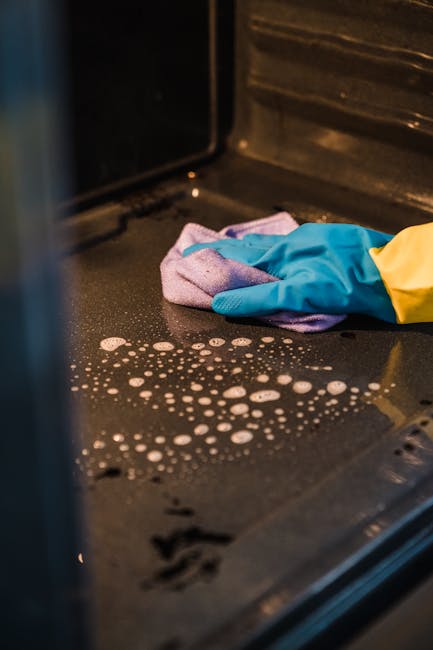
Oven cleaning is not just about brightening the visible interior. A proper service usually considers grease on doors, racks, trays, liners, side panels and the surrounding surfaces that collect splatter over time. We clean these areas carefully so the appliance feels more orderly overall, while still respecting the materials and condition of the oven. The work is practical rather than cosmetic-only, and it is designed around the realities of regular domestic cooking.
Different ovens can require different treatment. A standard single oven may need a simpler process than a larger range-style unit, while built-in models often involve more edges, seals and vents to work around. We treat the appliance as a working piece of kitchen equipment, not a decorative item. That means paying attention to the details that affect everyday use, including the condition of removable parts and the areas most likely to trap residue. Care and restraint matter as much as thoroughness.
Customers often want to know how far the cleaning goes and where the limits are. In practice, the service can cover the accessible sections of the oven and its associated parts, but it is not a restoration of damaged coatings or worn components. If a tray is discoloured from age, for example, cleaning may improve its appearance without making it look new again. That distinction helps set realistic expectations and keeps the work honest.
Cleaning the interior, racks and glass

The interior is usually the part that benefits most from a deep oven clean, especially where grease has hardened around shelves, corners and the base. We work through the accessible surfaces in stages so that loosened residue can be removed without spreading it around. This careful process is important because an oven often has a mix of smooth enamel, small fittings and removable accessories that all need slightly different handling.
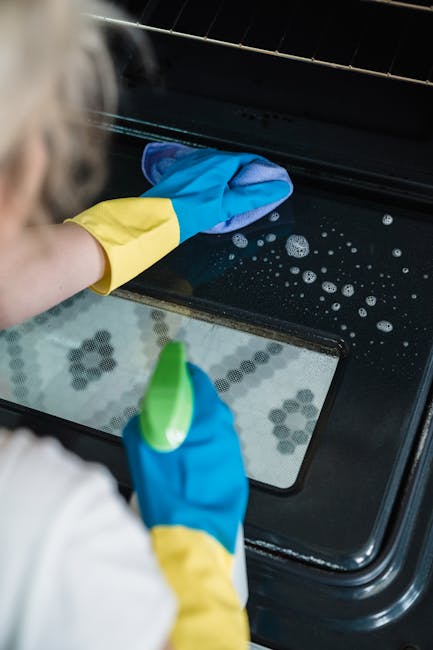
Glass doors deserve particular attention because they can show streaking, smoky marks and layers of splatter even when the rest of the appliance appears acceptable. We clean the accessible glass surfaces along with the frame and surrounding details, helping the oven look more presentable from the outside as well as inside. This is especially useful in kitchens where the oven door is one of the most visible elements. It can change the whole feel of the room when the appliance looks properly maintained.
We also give attention to racks, trays and other removable parts where they are included in the clean. These pieces often carry the residue that builds up fastest because they sit close to the heat and food spills. When they are cleaned properly, reassembly is easier and the appliance is more straightforward to use day to day. Some customers prefer to keep spare trays or accessories separate from the main clean; others want everything handled together. Both approaches are manageable.
Hobs, surrounds and kitchen finishing touches
Alongside the oven itself, many people want the adjacent cooking area cleaned in a way that matches the main appliance. Hobs, control areas and nearby splash-prone surfaces often collect marks from cooking and cleaning products alike. A focused service can make these parts look less tired and more consistent with the rest of the kitchen. The result is not a full kitchen clean, but it does improve the most visible cooking zone.
We also pay attention to the practical details that frame the oven, including edges, handles and the surfaces that are easy to overlook during a quick wipe-down. These details matter because they influence the overall appearance of the appliance once the main chamber has been cleaned. In many kitchens, a well-cleaned oven will still look unfinished if the front, knobs and surrounding areas are left untouched. That is why a considered approach works better than an isolated scrub.
If your appliance sits within fitted units, the surrounding area may need slightly more care to avoid water or cleaning residue reaching sensitive finishes. We work with that in mind and choose methods that suit the space rather than forcing a one-size-fits-all approach. If you would like to talk through the exact parts of the cooking area that should be included, it is worth doing so before the job is arranged so the work can be planned sensibly.
Why regular oven cleaning helps
Ovens naturally collect residue because they combine heat, food, moisture and repeated use in a confined space. Even when the appliance is functioning normally, baked-on deposits can make cleaning harder over time. A regular professional clean helps reduce that build-up and can make future maintenance easier for the household. It is a practical service for people who cook often, host occasionally or simply want the kitchen to feel better kept.
Another advantage is that a cleaner oven is easier to assess. If a door seal, shelf support or control edge needs attention, it is simpler to notice when the surrounding dirt has been removed. That does not mean the cleaning service replaces repairs, but it can make the appliance easier to monitor. The same applies to removable parts, where residue can hide wear or make normal use less tidy than it should be.
There is also a simple day-to-day benefit: the oven becomes more pleasant to use. No exaggerated promises are needed here. A clean appliance is generally easier to load, easier to inspect and easier to keep in good order between deeper cleans. If you are planning ahead rather than waiting until the residue is heavy, it can be sensible to ask for a quote and compare the scope against the condition of the oven.
Supported appliances and common oven types

Our oven cleaning service can be applied to a range of ordinary domestic appliance styles, provided the work is suitable for the condition and design of the unit. Built-in ovens, single ovens and larger cooking setups each bring their own layout considerations. The cleaning method needs to match the structure of the appliance so that access points, glass fronts, control areas and removable parts are handled appropriately.
Some kitchens also include cooking equipment with additional surfaces or compartments. In those cases, the cleaner’s task is to distinguish between the parts that are included in a standard oven clean and the parts that would need a separate arrangement. That distinction is useful because it keeps the service accurate. If a customer wants the whole cooking area refreshed, the scope can be discussed in a way that reflects the appliance, not just a generic checklist.
We do not present cleaning as a cure for faults, staining caused by age or wear in seals, coatings and coatings that have already deteriorated. Instead, the value lies in removing what can reasonably be cleaned and leaving the appliance in a better-maintained state. That honest boundary is helpful for households deciding whether a clean is the right next step or whether a repair enquiry is more appropriate.
Preparing for a clean and arranging the visit
Before a visit, it helps to think about access to the oven, whether nearby items need moving and which extras you want included in the scope. If you can describe the appliance type and its condition in a few words, that usually makes it easier to outline the work sensibly. Photos can also be useful when a customer wants to show the extent of residue or the style of cooker, although they are simply a practical aid rather than a requirement in every case.
It is also useful to mention any special considerations, such as delicate kitchen finishes, awkward positioning or accessories you would prefer handled separately. Clear information makes quotation easier and helps avoid misunderstanding about what will be cleaned. That is especially true where the oven sits within fitted cabinetry or where the kitchen layout is tight. A well-described job is easier to plan, and planning is what keeps the service focused on the right tasks.
Once the scope is clear, the next step is usually straightforward. You can review the work needed, decide whether any additional cooking-area parts should be included and then move on to the quotation stage. If the appliance needs a fuller service, it is sensible to contact us with the basics rather than leaving the details until the day of the visit.
Pricing and quotation factors
Oven cleaning prices depend on the type of appliance, the amount of residue present and whether extra items such as hobs, extractor areas or removable accessories are included. A compact oven with light build-up is different from a larger cooker with multiple sections, shelves or heavy grease deposits. These differences affect the time and attention required, so it is better to treat pricing as a scope-based estimate rather than a fixed assumption.
The condition of the glass, racks and internal fittings can also influence the work needed. For example, a clean that is mainly about refreshing visible surfaces will not be the same as one that has to address more stubborn build-up across several components. Where access is awkward or the oven is integrated tightly into the kitchen, the setup itself may also be relevant. That is why a quotation is best prepared from an accurate description of the appliance.
If you are comparing options, focus on whether the quotation reflects the actual work rather than the simplest possible description. A well-prepared quote should make it clear what is included and what is outside scope. That kind of clarity is useful for anyone wanting to budget sensibly for the service. For a straightforward next step, you can request a quotation once you know which parts of the appliance need attention.
About Fulham
Fulham is a riverside district in southwest London, lying within the London Borough of Hammersmith and Fulham. Historically part of Middlesex, it has long been shaped by its position beside the Thames and by the changing routes that connect west London with the city centre. The area includes a mix of residential streets, older parish and estate patterns, and later urban development that has left a varied streetscape. Fulham Palace, the former residence of the Bishops of London, remains one of its best-known historic sites, while nearby Bishop’s Park provides open riverside space and a link to the river frontage. The district is also associated with Stamford Bridge to the north-east, Putney Bridge to the south-western edge of the area, and the busy neighbourhoods around Fulham Broadway and Parsons Green. Church architecture, Victorian terraces and more modern infill development sit side by side, reflecting the district’s gradual evolution rather than a single period of building. Football is another part of local identity, with Stamford Bridge home to Chelsea FC and Craven Cottage home to Fulham FC, giving the area a strong presence in London’s sporting map. Transport connections, including Underground stations on the District line, have helped make the district closely linked with surrounding parts of inner west London. Its mixture of river access, historic buildings and lively residential streets gives Fulham a character that feels established yet continually in use.
Detailed cleaning choices for different kitchens

Not every kitchen needs the same oven-cleaning approach. Some households want the appliance restored as part of general upkeep, while others need a more detailed clean after a long period of cooking, hosting or practical everyday use. The difference is important because it changes how much attention is needed on trays, shelves, doors and the surrounding surfaces. A careful service starts by matching the work to the appliance rather than treating every job as identical.
In fitted kitchens, the challenge is often to clean thoroughly without disturbing neighbouring cabinetry or decorative finishes. In more open layouts, the focus may be on the appearance of the front-facing appliance and the cooking zone around it. Either way, the objective remains the same: remove dirt where it has accumulated and leave the appliance in a more orderly state. This is why controlled methods are preferable to aggressive shortcuts. They preserve the usable parts while improving the overall appearance.
It can also be useful to decide whether you want only the main oven body attended to or the broader cooking zone included. Some households prefer a targeted clean for the oven and racks alone, while others want hobs, glass and related parts completed together for consistency. We can discuss those choices in plain terms so the final scope reflects the kitchen you actually have, not a generic package that misses important details.
Making the service straightforward from start to finish
A good oven clean should feel organised rather than disruptive. That means the work is best approached with a clear understanding of the appliance, the surrounding area and the results the customer wants from the visit. The more accurately the scope is described, the easier it is to plan the clean properly. This is why straightforward communication matters more than lengthy explanations. The right details are usually enough.
It is also helpful to think ahead about what matters most after the clean. For some households it is the internal condition of the oven; for others it is the appearance of the door and exterior. Some want the cooking accessories included, while others are only interested in the appliance itself. Those choices affect the quotation and the shape of the work. Keeping them clear at the outset makes the service simpler for everyone involved.
When you are ready to move forward, the most useful step is to make contact with the basic information about the oven and the cleaning you need. That lets us respond with a practical quotation and a scope that reflects the real job. If you want to proceed, the final step is simple: get in touch for a quote.
Choosing the right level of oven cleaning

Choosing the right level of oven cleaning depends on how the appliance is used and what condition it is in now. A lightly used oven may only need a sensible refresh, while a heavily used one can require more detailed attention to residue, racks and glass. There is no single answer that fits every kitchen, which is why the service is best discussed in relation to the appliance rather than treated as a fixed product. That way, the result is more accurate and more useful.
Households sometimes underestimate how much difference the condition of the removable parts can make. Even when the main interior appears manageable, greasy racks or marked trays can spoil the overall impression. Equally, the opposite can be true: the front of the oven may look acceptable while the interior needs considerably more work. A thoughtful cleaning service addresses both possibilities and leaves the kitchen looking more cohesive. That balance is one of the reasons people arrange a proper oven clean rather than a quick surface wipe.
If you would like the service priced and explained clearly, use the main details of the appliance and ask for a quotation. That is the simplest way to move from general interest to a definite plan. A clear request helps us assess the scope and respond appropriately, so you can decide whether to go ahead with confidence.